Insights
Restaurant Loyalty Programs: Types, Costs and Setup (2026)
How to set up a restaurant loyalty program that pays off: stamp, points and tier models compared, reward cost math, consent rules and KPIs to track.
Updated: November 28, 2026
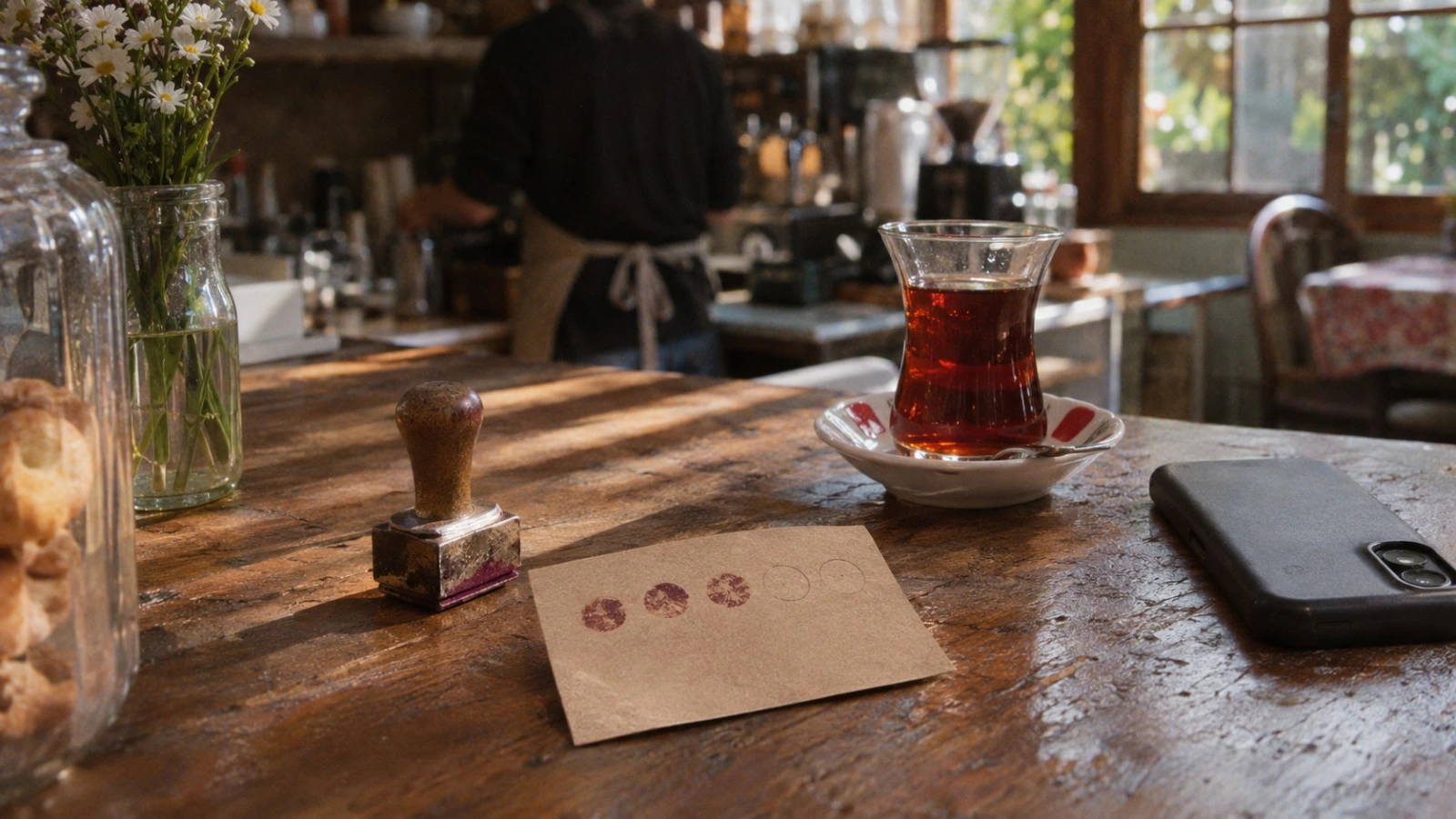
A restaurant loyalty program rewards regular guests for visits or spend so they come back more often. To set one up, pick a single goal (more visits or a higher average check), choose a stamp, points or tier model, and price the reward on its food cost rather than its menu price. If you collect phone numbers or emails, ask for clear marketing consent at sign-up and give guests an easy way to opt out.
This guide compares the main loyalty models, walks through the reward cost math, lists the KPIs that show whether a program pays off and follows a sample cafe from launch to review.
What is a restaurant loyalty program?
A loyalty program records each guest's visits or spend and unlocks a reward once they reach a threshold. The classic version is the punch card: buy nine coffees, get the tenth free. More advanced programs turn spend into points, unlock perks at higher tiers, or add a birthday treat for members.
The goal is not to hand out discounts. It is to change behavior: turn a once-a-week guest into a twice-a-week guest, fill quiet hours, or get regulars to try a category they skip. That is why loyalty works best alongside pricing and menu layout, as part of a wider plan to increase restaurant revenue.
Which loyalty program model fits your restaurant?
For most independent restaurants, the best model is the one a guest understands in one sentence.
Model | How it works | Best for | Watch out for |
|---|---|---|---|
Punch / stamp card | A free item after a set number of purchases | Cafes and quick-service spots with a frequent core item | Paper cards get lost and can be faked |
Points | Points per amount spent, redeemed for items or credit | Restaurants with varied check sizes | Guests disengage if point value is unclear |
Tiered (VIP) | Perks increase as visits or spend grow | Restaurants with a strong regular base, fine dining | Perks must feel genuinely special |
Birthday reward | A treat for members on their birthday | Any concept, as an add-on | Collect only the data you will use |
Paid membership | A monthly fee for a fixed perk, such as a daily drip coffee | Cafes in busy office areas | Cost it on your heaviest user, not the average |
How do you set up a restaurant loyalty program step by step?
Pick one goal. "Fill weekday afternoons" or "sell more desserts" is measurable. A program that tries to fix everything ends up with confusing rules.
Set a reachable threshold. If a regular visits twice a month, a ten-stamp card takes five months, and most people give up. Aim for a reward a regular can reach within a few weeks.
Choose high-margin rewards. Pick items that feel generous but cost little to make. Your menu engineering matrix shows which dishes have the best contribution margin.
Keep sign-up under a minute. A QR code at the counter or on the table, a name and a phone number or email is usually enough.
Handle consent up front. Show a short privacy notice and use a separate, unticked box for marketing messages.
Train staff and promote it. Every server should explain the program in one sentence, and the rules should read the same on table cards, at the till and on your menu.
How much does a loyalty reward really cost?
Price the reward on what it costs you, not on what it sells for. A simple, hypothetical example (pre-tax):
Stamp card: a coffee sells for $5 and costs $1.25 in ingredients. With "buy 10, get 1 free", a guest pays $50 for ten coffees and the free one costs you $1.25. To the guest it feels like about 9% off (11 coffees for $50); to you, the reward costs 2.5% of the revenue that earned it.
Points: 5 points per $5 spent, a free dessert at 100 points. That takes $100 of spend. If the dessert costs $2.25 to make, the reward costs 2.25% of that revenue.
Assume every reward gets redeemed when you run the numbers, so you see the worst case. If you need to work out item costs first, our menu pricing guide covers recipe costing step by step.
What consent and privacy rules apply to loyalty programs?
Names, phone numbers, emails and birthdays are personal data. The exact rules depend on where you operate, but a few principles hold almost everywhere: tell guests what you collect and why, collect only what you need, ask for separate consent before sending marketing texts or emails, and include a clear way to unsubscribe in every message. In the US, for example, the FTC's CAN-SPAM compliance guide explains the opt-out requirements for commercial email. Guests should be able to join the program without agreeing to marketing. If in doubt, have a local lawyer review your sign-up wording.
Paper punch card or digital loyalty card?
Paper is cheap and fast to launch, but you cannot see who comes back or how often, and a lost card means lost progress. Digital cards (wallet passes, web-based cards or POS-linked memberships) let you track visits and redemptions, but usually come with setup work and a monthly fee. A practical path for a small cafe is to test with paper for a couple of months, then move to digital once the program proves popular. Either way, put the rules on your QR digital menu so guests can read them at the table. Foost does not run loyalty cards itself, but its campaign and recommendations area on the Pro plan can surface program announcements inside the menu.
Which KPIs show whether your loyalty program works?
KPI | How to calculate it | What it tells you |
|---|---|---|
Sign-up rate | New members ÷ total guests in the period | Is the offer clear and appealing? |
Repeat visit rate | Members visiting 2+ times a month ÷ all members | Is behavior changing? |
Redemption rate | Rewards redeemed ÷ rewards earned | Is the threshold reachable and the reward wanted? |
Member average check | Member spend ÷ member checks | Do members spend more? |
Reward cost ratio | Cost of rewards ÷ member revenue | Is the program profitable? |
Record the baseline before launch and compare monthly. To lift the average check, pair the program with upselling and cross-selling: points give guests a natural reason to add a drink or dessert.
What does a loyalty program look like in a small cafe?
Take a hypothetical 20-table cafe in an office district: busy mornings, quiet weekday afternoons. The owner launches an 8-stamp card with double stamps between 2 and 5 pm, one stamp per check of $5 or more, and a coffee plus cookie as the reward. For the first two months the card is paper and no contact data is collected. In month three it moves to a digital card with a privacy notice and an opt-in for offers. The team tracks afternoon checks weekly; if nothing moves after two months, they change the hours or the reward.
What are the most common loyalty program mistakes?
Thresholds so high that even regulars give up.
Judging reward cost by menu price, or never costing it at all.
Rules full of exceptions and expiry dates.
Sending marketing messages to numbers collected without consent.
Not promoting the program at the table, on the menu and at the till.
Offering points for reviews, which breaks Google's policy on fake engagement. See our guide to restaurant reviews for better ways to ask.
Start simple, cost the reward, collect consent properly and adjust based on the numbers. To compare plans that let you show offers on your menu, see Foost packages.
FAQ
- How do you start a loyalty program for a restaurant?
- Pick one measurable goal, choose a simple model (stamp card, points or tiers), set a threshold regulars can reach within a few weeks and price the reward on its ingredient cost. Keep sign-up under a minute, ask for separate marketing consent and review the numbers monthly.
- What is the best loyalty program for a small cafe?
- For most cafes a stamp card works best because guests understand it instantly and coffee is bought often. Keep it to 6 to 10 stamps so regulars can earn a reward within a few weeks.
- How much should a restaurant loyalty reward cost?
- Measure it as a share of the revenue needed to earn it. In the hypothetical examples in this guide, a free coffee after ten and a free dessert at 100 points both cost the restaurant around 2 to 3% of that revenue in ingredients.
- Are digital loyalty cards better than paper punch cards?
- Digital cards let you track repeat visits and redemptions and cannot be lost or faked as easily, but they may come with setup work and a monthly fee. Many small venues test with paper first and switch once the program proves popular.
- Do I need consent to text or email loyalty members?
- In most markets, yes. Ask for marketing consent separately from program sign-up, keep a record of it and include an easy opt-out in every message. Rules vary by country, so check local law.