Insights
How Restaurants Get Found in AI Search: ChatGPT, Gemini and the New Discovery (2026 Guide)
How ChatGPT, Gemini and Google AI Overviews choose restaurants, plus a 2026 checklist to get your restaurant into AI search results: your menu, schema and reviews.
Updated: November 22, 2026
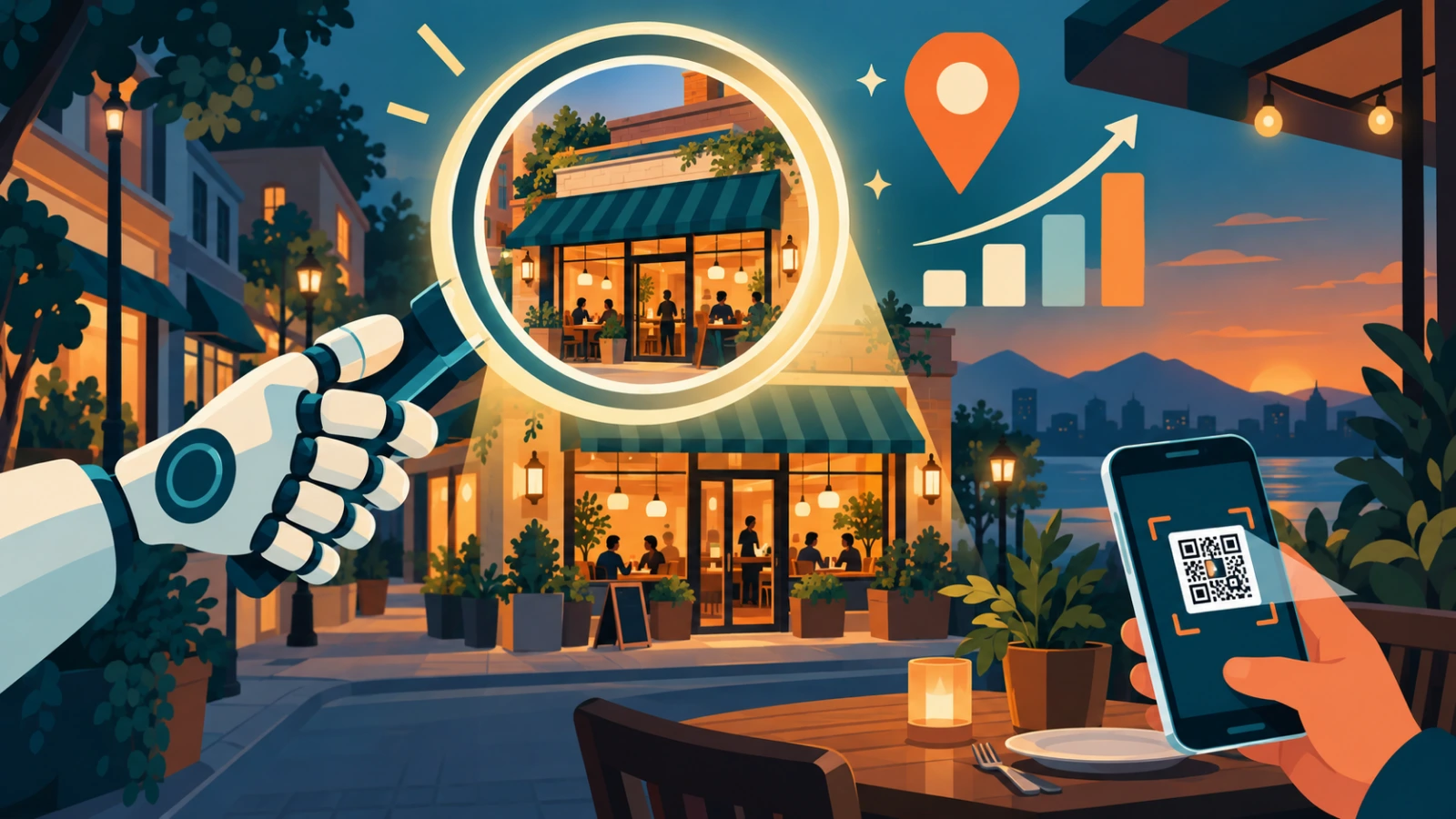
"Where should I eat tonight?" More and more guests no longer type that into a search engine - they ask an AI assistant. ChatGPT, Gemini, Perplexity and the AI summaries inside Google now answer with a short list of restaurants, and the places on that list win the table. For restaurant owners, a new question matters in 2026: when an AI recommends restaurants in your neighborhood, does it mention yours? This guide explains what is known about how AI search assembles recommendations and what you can do about it.
How AI Assistants Put Together Restaurant Recommendations
Each assistant works differently, and none of them publish their exact ranking logic. What is consistent across them: they assemble answers from information they can read - your website, your Google Business Profile, review platforms, local guides and, critically, your menu. A restaurant with a detailed, structured online presence gives an assistant confident material to work with. A restaurant whose menu exists only as a photo gives it very little.
Areas worth attention:
Machine-readable menu content. AI assistants are increasingly asked things like "who has vegan options near me?" or "where can I eat gluten-free pasta?" If your dishes exist only inside a scanned image, how accurately the text can be extracted depends on the image quality and the tool doing the reading.
Consistent business facts. Name, address, opening hours and cuisine should match across your site, Google profile and directories.
Fresh reviews and mentions. Public reviews and local coverage are part of the material these systems can read.
Why Image-Only Menus Are Hard for Machines to Read
Precision matters here, because the problem is often misstated. Google can index the text inside text-based PDFs, and some AI tools can read them too. The practical problems sit elsewhere: many restaurant menus are scanned documents or plain photos, which can only be read through OCR, and OCR can introduce errors. When a PDF does not explicitly mark the relationship between a dish name, its description and its price, a machine extracting that information may struggle to parse it.
An HTML menu puts every dish name, description and price on a real web page as real text. That does not guarantee anything about recommendations - but it removes the readability problem, and structured data can make the information easier for machines to parse correctly. A question like "best truffle pasta in Kadikoy" is answered from text a machine managed to read somewhere, not from a photo of a menu.
Structured Data: Giving Machines a Clear Map
Beyond readable text, structured data - schema markup that labels your business as a restaurant, your page as a menu and your entries as dishes with prices - gives machines an explicit map of your content. Search engines have long used this markup, and pages carrying proper Restaurant, Menu and FAQ structured data can make the information easier to extract correctly.
That is why one thing matters when you choose a digital menu platform: does it publish your menu as clean HTML with the right schema built in? Open a live menu link and check before you sign up, so you never have to become a web developer.
Reviews, Mentions and Local Proof
Public reviews and local coverage are part of the material these systems can read. Recent Google reviews, TripAdvisor presence, local blog coverage and "best of" lists all feed the picture an assistant forms of your restaurant. Practical moves:
Ask happy guests for reviews - a QR menu is a natural moment for the ask, right after a good meal.
Answer reviews, especially negative ones; active owners signal a living business.
Keep your Google Business Profile current: hours, photos, attributes and a link to your live menu.
Putting It Together: An AI-Visibility Checklist for 2026
Publish your menu as real, crawlable web pages rather than only as a PDF or photos.
Keep dish names and descriptions specific: "slow-cooked lamb shank with smoked eggplant" beats "chef's special".
Make sure your menu pages carry structured data and are linked from your Google profile.
Keep your business facts identical everywhere.
Build a steady stream of recent reviews and local mentions.
Update seasonally - fresh content signals an active business to both search engines and AI.
Where Foost Fits
Foost stores every menu you publish as structured data: dishes, prices, categories and languages in one place, with updates that go live in seconds. That makes it easy to keep the same, current menu on your site, your Google Business Profile and the platforms guests use. When a guest asks their AI assistant where to find your signature dish, consistent and up-to-date menu information is what gives your restaurant a chance to be the answer. Try Foost free and take your menu off PDF.
Conclusion
AI search is not replacing Google - it is becoming a layer guests consult first. No one can guarantee an AI recommendation, but restaurants that make their menus machine-readable, their facts consistent and their reputation fresh remove the readability obstacles that are within their control. These steps are meant to improve the accessibility and upkeep of your menu information; they do not guarantee that an assistant will recommend your restaurant.
FAQ
- Can ChatGPT and Gemini actually see my restaurant's menu?
- They can read menu content published as text on the web, and Google can index text-based PDFs. The unreliable cases for machines are scanned or photographed menus and files without real per-dish text structure.
- What is the fastest way to make my restaurant visible to AI search?
- Publish your menu as structured HTML pages with dish names, descriptions and prices, keep your Google Business Profile complete and consistent, and collect fresh reviews. A digital menu platform handles the structured part automatically.
- Does structured data really matter for AI recommendations?
- It can help. Schema markup for restaurants, menus and FAQs tells machines exactly what your content is, which can make your pages easier to interpret correctly.
- Is AI search replacing Google for restaurants?
- Not replacing, but a growing share of discovery questions is answered by AI assistants and AI summaries inside Google. The same fundamentals - readable content, consistency, reviews - win in both.
- How do I know if an AI assistant recommends my restaurant?
- Ask it the way a guest would: 'best [your cuisine] in [your neighborhood]' or 'where can I eat [your signature dish] nearby'. If you are missing, the checklist in this guide shows where to start - no single step guarantees a mention, but together they improve your odds.