Insights
Multilingual Restaurant Menus: How Serving Guests in Their Own Language Grows Revenue (2026 Guide)
A multilingual menu lets every guest order in their own language. Learn why it grows revenue, which languages to add, and how to launch one in 2026.
Updated: November 26, 2026
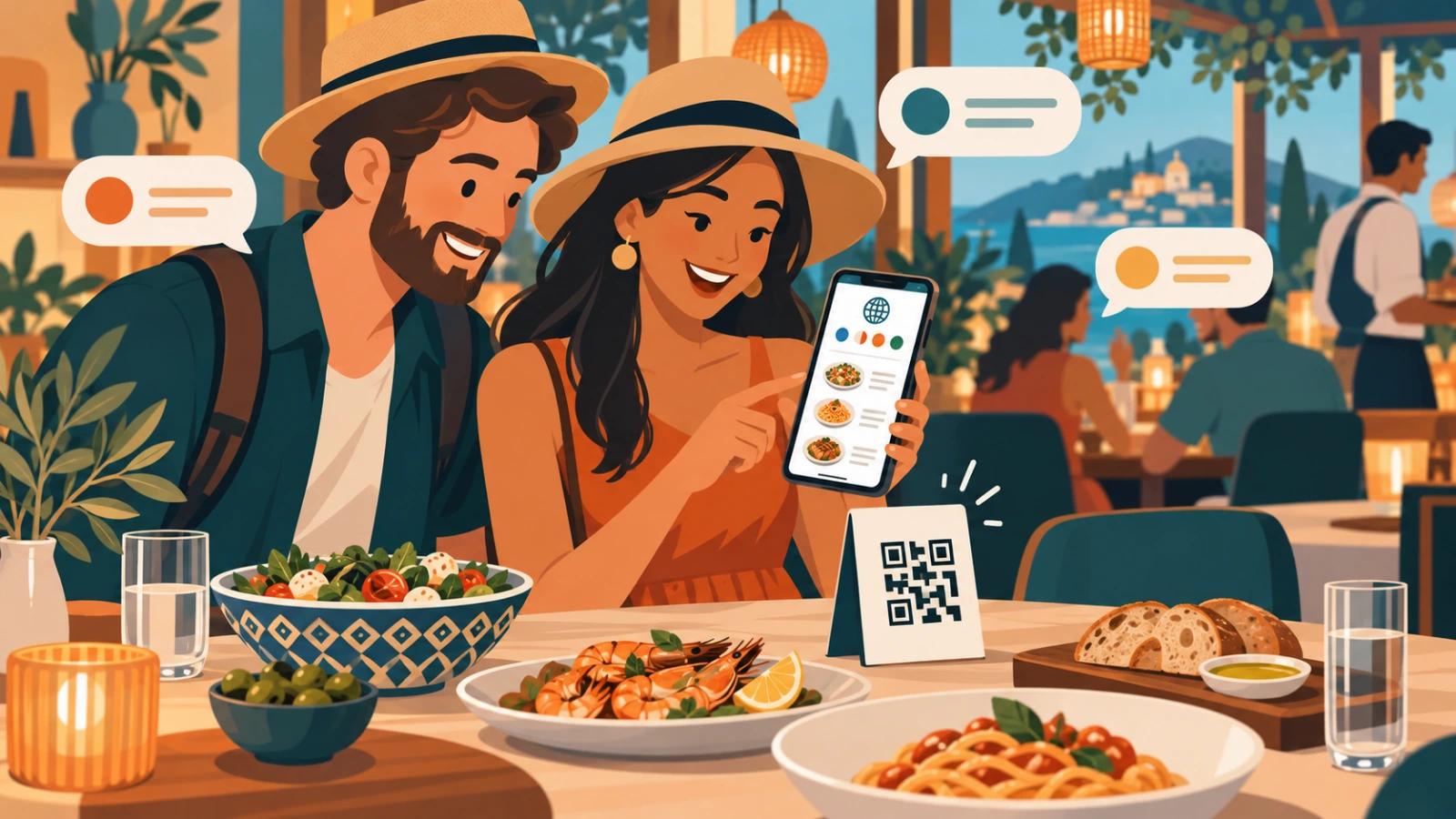
Every day, restaurants in tourist areas lose money to a problem they cannot hear: a guest opens the menu, cannot read it, orders the one dish they recognize - or quietly decides to eat somewhere else. A multilingual menu removes that silent barrier. In 2026, offering your menu in your guests' own languages is one of the cheapest revenue wins available to a restaurant, and with a QR digital menu it takes hours, not weeks, to set up.
What Is a Multilingual Digital Menu?
A multilingual digital menu is a menu your guests open on their own phones - usually by scanning a QR code on the table - that automatically shows every dish, description and price in the guest's language. The guest does not download an app and does not ask the waiter for the "English menu"; they scan, and the menu simply speaks their language.
Behind the scenes, the restaurant maintains one menu and the system keeps each language version in sync: change a price once and it updates everywhere, in every language, instantly.
Why Language Is a Revenue Question, Not a Courtesy
Restaurants usually treat translation as a nice extra for tourists. The numbers say otherwise:
Guests order more when they understand everything. A guest who can read the full menu discovers appetizers, desserts and drinks they would never ask about. Order anxiety - "I hope I did not just order something with an ingredient I avoid" - shrinks the check.
Ordering speeds up. Tables that do not need a waiter to translate decide faster, which means shorter meals and more table turns in peak hours.
Staff time comes back. Every "what is this dish?" conversation costs a server minutes during the rush. A self-explanatory multilingual menu returns that time to service.
Reviews improve. International guests consistently mention menu language in reviews. Being understood is part of the hospitality they rate.
Which Languages Should Your Menu Support?
Start with your actual guests, not a guess. Look at where your visitors come from - your own observations, booking data, or the languages your staff gets asked for most. For most restaurants in tourist destinations, the practical starting set is:
Your local language - the base version everything else is translated from.
English - the default international fallback almost everywhere.
The languages of your top tourist nationalities. In Turkey that typically means Arabic, German and Russian; in Spain, German and French; in Thailand, Chinese and Korean.
Two or three well-maintained languages beat eight neglected ones. You can always add more once the workflow is in place.
Machine Translation vs Professional Translation for Menus
Menus are a special case for translation: short, repetitive, full of dish names that should stay appetizing. Modern AI translation handles menu content remarkably well, especially with food-specific context - dish names, ingredients, allergens, portion notes. The practical approach most restaurants use in 2026:
Let AI do the bulk translation of descriptions and categories.
Review dish names with a native speaker - or your own staff - for the handful of items where a wrong word would be embarrassing or confusing.
Keep allergen and dietary information precise; this is the one area where a mistranslation has real consequences.
How Multilingual QR Menus Work in Practice
The guest experience is deliberately boring: scan the QR code, the menu opens in the phone's language, and a language switcher sits at the top for anyone who wants a different one. The restaurant experience matters more:
One menu to maintain: you edit dishes, prices and photos once; every language updates automatically.
Seasonal changes are instant: a new special appears in all languages the moment you publish it - no reprinting translated inserts.
Photos carry across languages: a great dish photo sells in every language without translation at all.
The Hidden Benefit: Being Found Online
A multilingual menu also works for you before guests walk in. Tourists search in their own language - "restaurant menu Istanbul" in German, Arabic or Russian. Your Foost menu is made for guests at the table and isn't indexed by search engines, so for search engines and AI assistants publish the same menu as text on your own website and link it from your Google Business Profile.
Getting Started: A Simple Rollout Plan
Pick your languages from your actual guest mix (start with two or three).
Put your menu on a digital platform that supports multilingual publishing natively.
Translate with AI, review dish names with a native speaker, double-check allergens.
Place QR codes on every table and train staff to point scanning guests to the language switcher once.
Watch the data: digital menus show which languages your guests actually use - let that guide what you add next.
Foost was built for exactly this: publish your menu once and serve it in every language your guests speak, with AI handling translation, instant updates and per-language analytics. Restaurants using multilingual digital menus typically see the difference within the first tourist season - faster orders, fuller checks and happier international guests.
Conclusion
A multilingual menu is not a translation project; it is a revenue project. Guests who understand your menu order more, decide faster and leave better reviews. In 2026 the barrier is gone: a QR digital menu with AI translation lets any restaurant speak its guests' languages by tonight. Try Foost free and see your menu in every language your guests speak.
FAQ
- Why should a restaurant have a multilingual menu?
- Because guests who can read the whole menu order more, decide faster and leave better reviews. A menu guests cannot read silently costs restaurants appetizer, dessert and drink sales every service, especially in tourist areas.
- Which languages should my restaurant menu support?
- Start with your local language and English, then add the languages of your most common tourist nationalities - in Turkey typically Arabic, German and Russian. Two or three well-maintained languages beat many neglected ones.
- Is machine translation good enough for restaurant menus?
- For menus, yes - modern AI translation handles dish descriptions and categories very well. Have a native speaker review dish names and keep allergen information exact, since those are the spots where errors matter.
- Do multilingual menus help with SEO?
- Indirectly. Foost menu pages are made for guests at the table and are not indexed by search engines. For search and AI visibility, publish your menu as text on your own website and link it from your Google Business Profile in the languages your guests use.
- How do guests switch languages on a QR menu?
- The menu opens automatically in the phone's language after scanning the QR code, and a language switcher at the top lets guests change it anytime. No app download or printed inserts needed.