Insights
Restaurant Menu Pricing: How to Price Your Dishes for Profit (2026 Guide)
Learn how to price a restaurant menu in 2026: food cost percentage, contribution margin, competitor positioning and psychology tactics that protect profit.
Updated: November 13, 2026
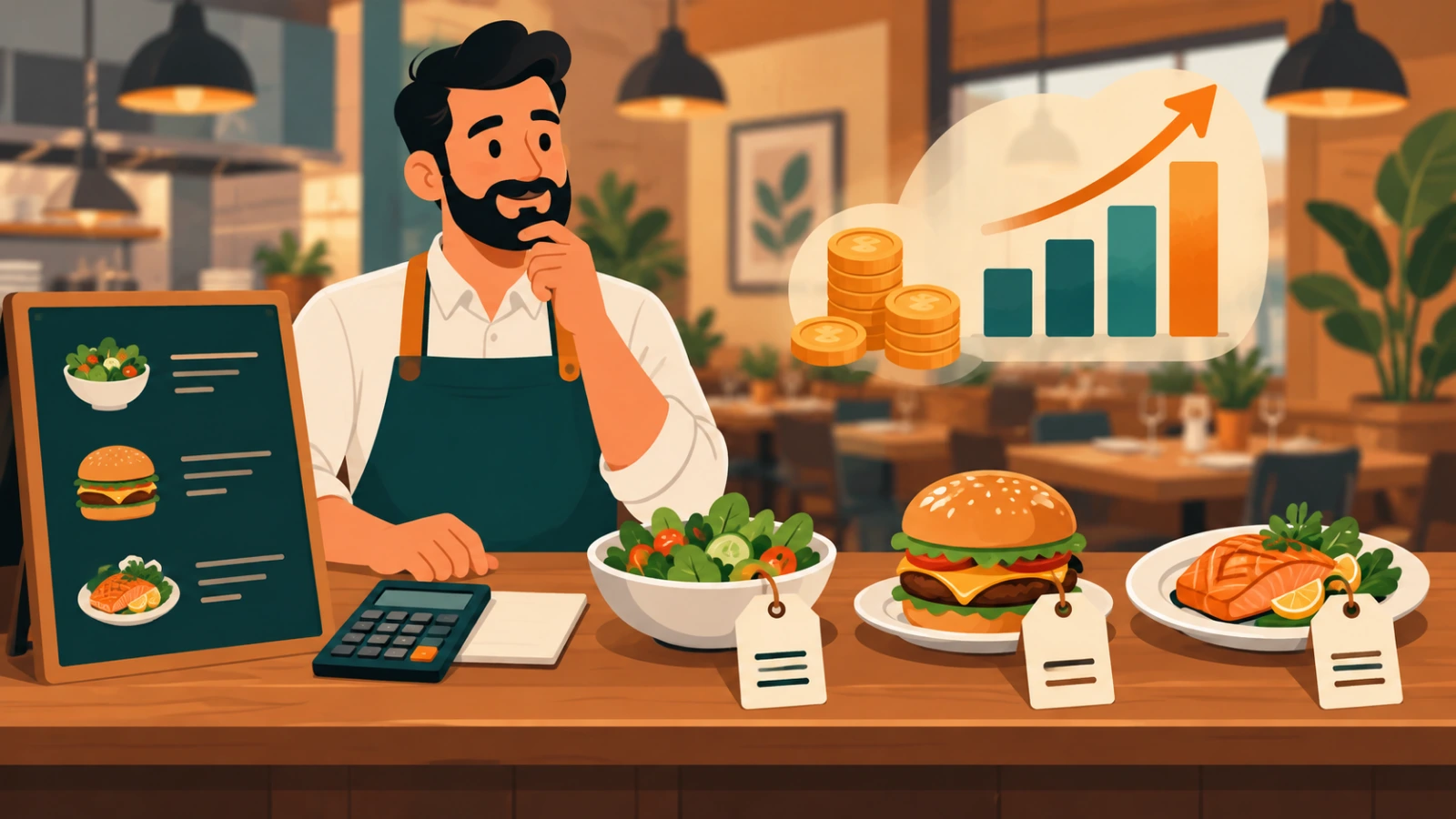
Most restaurant owners price their menu once, feel vaguely uneasy about it, and then avoid the topic for years - while ingredient costs climb steadily upward. In 2026, that approach quietly eats the profit out of an otherwise healthy restaurant. Menu pricing is not a one-time decision but a system: a few simple formulas, a clear positioning choice, and regular small adjustments instead of painful annual jumps. This guide walks through the whole system.
Start With Your Real Food Cost
Every pricing method begins with one number: what a dish actually costs you to produce. Add up the ingredients in a single portion - including the garnish, the oil in the pan and the bread that arrives with it - and you have the plate cost. Most restaurants are surprised the first time they do this honestly; the dish they thought cost $3 often costs $4.20.
Do this for every item on the menu. It takes a weekend the first time and an hour a month to maintain, and every other decision in this guide depends on it.
Method 1: Food Cost Percentage Pricing
The classic approach: decide what percentage of the selling price your food cost should be, then divide the plate cost by that percentage.
Formula: Menu price = Plate cost / Target food cost %
A pasta that costs $4 to produce, priced at a 30% food cost, sells at about $13.35 - which you would round to $13.50 or $13.95. Typical target ranges by concept:
Fine dining: 30-35% (higher food cost is acceptable because the check is large)
Casual dining: 28-33%
Fast casual and cafes: 25-30%
Drinks, especially coffee and soft drinks: 15-20%
Food cost percentage is a good floor, but it has a blind spot: it ignores how much money a dish actually earns. That is where the second method comes in.
Method 2: Contribution Margin Thinking
The contribution margin of a dish is its selling price minus its food cost - the actual money each plate contributes to rent, wages and profit. A $30 steak with a $12 food cost contributes $18; a $14 pasta with a $4 food cost contributes $10. The steak has a worse food-cost percentage but earns more per sale.
Price your high-volume dishes so their contribution margin carries the business, and use menu engineering (comparing each dish's popularity against its margin) to decide which items deserve a price nudge, a repositioning, or a rework. The two tools work together: food cost percentage sets the floor, contribution margin sets the strategy.
Method 3: Positioning Against the Market
Your prices also tell guests what kind of restaurant you are. A burger priced far above the neighborhood average signals a premium experience - and must deliver one in the room, the service and the plate. Pricing far below average fills seats but trains guests to expect cheap, and raising prices later feels like a betrayal.
Map the five restaurants a guest would realistically choose instead of yours. Note their price for your direct comparable dishes. You do not have to match them; you have to know which side of them you stand on, and why.
Menu Psychology: Small Details, Real Money
Drop the currency symbol. Menus that show "14" instead of "$14" measurably reduce price focus; guests spend more when the number is not a price tag.
Charm pricing works, but sparingly. Ending in .95 or .99 slightly lifts sales in casual concepts; fine dining usually rounds to whole numbers because it reads as more confident.
Use a decoy. A deliberately expensive signature dish makes everything under it look reasonable - guests anchor on the highest number they see.
Descriptions earn the price. A dish described with its origin, technique and ingredients can carry a higher price than the same dish listed flatly.
Raising Prices Without Losing Guests
The worst strategy is the most common one: hold prices for two years, then jump 15% overnight. Guests notice big jumps; they rarely notice small, regular adjustments. Better rules for 2026:
Prefer small, frequent increases (3-5% once or twice a year) over rare big ones.
Leave signature dishes alone and adjust items guests compare less: sides, drinks, seasonal specials.
Add value alongside price - better photos, clearer descriptions, a new garnish - so the menu improves as it gets more expensive.
Never apologize on the menu. Confident, well-presented prices simply are the prices.
Why Static Menus Lose the Pricing Battle in 2026
Every pricing strategy above assumes you can actually change your prices. With printed menus, a price change means design, printing and a week of stickers over old numbers - so owners delay, and margins erode in the meantime. A QR digital menu removes the friction entirely: change a price and it is live on every table the same minute. That is what makes the "small, frequent adjustments" strategy practical instead of theoretical.
Foost was built around exactly this reality: update any price in seconds from your phone, keep every language version in sync automatically, and use the analytics to see which dishes guests actually respond to after each change. Prices shift; the menu keeps up.
Conclusion
Profitable menu pricing is a system, not a guess: know your real plate costs, set a food-cost floor, think in contribution margin, position deliberately against your market, and adjust in small confident steps. Restaurants that treat pricing as a living process protect their margins through any cost environment - and a digital menu makes the process nearly effortless. Try Foost free and update your first price today.
FAQ
- How do you calculate menu price from food cost?
- Divide the dish's plate cost by your target food cost percentage. A dish costing $4 with a 30% target gives about $13.35; round it to a psychologically sound price like $13.50 or $13.95.
- What is a good food cost percentage for a restaurant?
- Most restaurants target 25-35% depending on concept: fine dining 30-35%, casual dining 28-33%, fast casual 25-30%, and drinks 15-20%. What matters most is the contribution margin each dish earns per sale.
- How often should a restaurant update its prices?
- Review prices at least quarterly and prefer small regular adjustments (3-5%) over rare big jumps. With a digital menu, price updates go live instantly, so frequent fine-tuning is practical.
- Do prices ending in .95 or .99 really work?
- Charm pricing has a modest positive effect in casual concepts. Fine dining usually rounds to whole numbers, which reads as more confident. Consistency and perceived value matter more than endings.
- How do I raise menu prices without losing customers?
- Use small frequent increases instead of one big jump, leave signature dishes stable, adjust sides and drinks first, and improve perceived value with better photos and descriptions at the same time.