Insights
5 Ways to Increase Your Restaurant Revenue in 2026
Margins are tight in 2026. Here are 5 practical ways to grow restaurant revenue: smart upselling, better visuals, more reviews, multilingual menus and less waste.
Updated: November 22, 2026
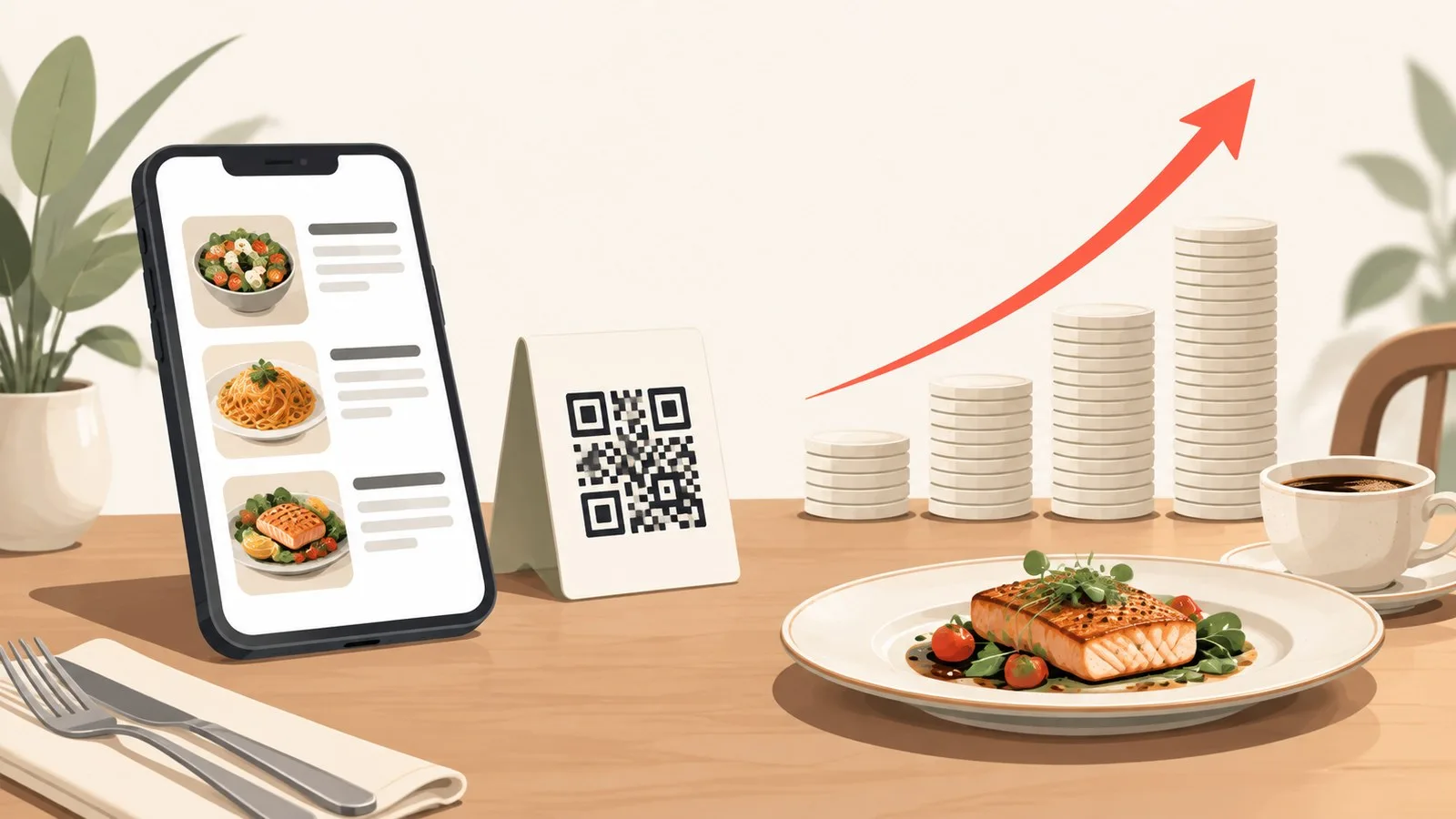
2026 is not an easy year to run a restaurant. The National Restaurant Association expects real (inflation-adjusted) sales growth of only 1.3% this year, and 42% of operators say they weren't profitable in 2025. Food costs are still the top pain point: in TouchBistro's 2026 survey of more than 600 full-service operators, 28% named food and inventory costs as their single biggest financial strain, and 68% had raised menu prices in the past year.
Raising prices again is not a plan. The restaurants that grow this year will be the ones that sell more to the guests already at the table, win more guests online, and waste less. Here are five practical ways to do that, and how a smart digital menu like Foost helps with each one.
1. Sell more to every table with smart pairings
The cheapest revenue you will ever earn comes from guests who are already seated. A side dish, a glass of wine that fits the main, a dessert that is easy to say yes to: these add up fast over hundreds of covers a week.
The problem is that upselling depends on your staff remembering to do it, on a busy night, at every table. A digital menu can do it every time.
How Foost helps: Foost's AI adds expert-level pairings to each dish, so a guest looking at a braised short rib sees the wine that goes with it, and a guest ordering pasta sees the salad that completes it. Restaurants using Foost pairings have seen side-dish sales double. Pro and Premium plans include AI recommendations on every product.
2. Make your dishes look as good as they taste
Guests order with their eyes. A plain line of text rarely makes anyone crave anything, and research on menu design keeps showing that visuals change what people choose.
How Foost helps: Foost matches short stock videos from its dish imagery library to the items on your menu, so guests see food in motion instead of a wall of text. The Foost Lab credit on Pro and Premium plans goes toward professional photo and video. One restaurant owner told us a product that had sat untouched on their menu for three years started selling so fast they couldn't keep it in stock after switching to Foost visuals.
3. Turn your reviews into a growth engine
Online reputation is revenue. A Harvard Business School study by Michael Luca found that a one-star increase in a restaurant's Yelp rating leads to a 5-9% increase in revenue. And according to BrightLocal's 2025 Local Consumer Review Survey, only 4% of consumers say they never read online reviews of local businesses.
Most happy guests never leave a review because nobody asks them at the right moment. Unhappy guests often do, after they've left.
How Foost helps: Foost collects live feedback from guests right from the menu, while they're still at the table. Happy guests get an easy path to leave a Google review in the moment, and you see critical feedback right away, so you can fix problems before they turn into one-star posts. More good reviews means better visibility on Google, and better visibility means more new guests walking in.
4. Speak every guest's language
Tourists and international guests are a big opportunity, but a menu they can't read is a barrier. When guests can't understand dishes, they order less, order the "safe" option, or ask staff to translate item by item, which slows down service for everyone.
Dietary questions create the same friction. Guests with allergies or specific diets want clear answers before they order.
How Foost helps: Foost translates your menu into 32 languages, so every guest can browse in the language they're comfortable with. It detects common allergens like gluten, dairy and nuts, shows calories, portion sizes and prep time on each dish, and includes an AI Host that answers guest questions 24/7. "Any gluten-free desserts?" gets an instant answer, without pulling a server away from another table.
5. Update fast, track what sells, and waste less
Printed menus lock you in. Every price change, sold-out item or new special means reprinting or crossing things out by hand. And without data, it's hard to know which dishes earn their place on the menu and which ones just tie up ingredients.
With food costs this high, that matters. TouchBistro's 2026 report found waste reduction was the top strategy operators used to fight rising food costs (42%), and 29% were turning to technology and AI tools to find inefficiencies.
How Foost helps: With Foost, you update dishes, prices and photos from the restaurant panel anytime, and changes go live instantly. The analytics dashboard shows which dishes perform, so you can push your best sellers, rework or drop the weak ones, and buy stock with more confidence. Running events? Foost lets you promote wine nights, chef's tables and live music inside the same menu guests are already browsing.
Getting started takes minutes, not months
The best part: none of this requires new hardware or a long setup. Upload your current PDF or photo menu, and Foost's AI turns it into a live digital menu, with categories, translations, allergens, calories and pairings, in about three minutes. You get 7 days of panel access to fine-tune everything, then print your QR code and start selling more. On Pro and Premium plans, the Foost team sets up your menu for you.
Every plan starts with a 7-day free trial, no card required.
Ready for a menu that sells for you? Upload your menu and try Foost free.
Sources: National Restaurant Association, 2026 State of the Restaurant Industry; TouchBistro, 2026 American State of Restaurants Report; Michael Luca, "Reviews, Reputation, and Revenue: The Case of Yelp," Harvard Business School; BrightLocal, Local Consumer Review Survey 2025.